
The Sale You Almost Had

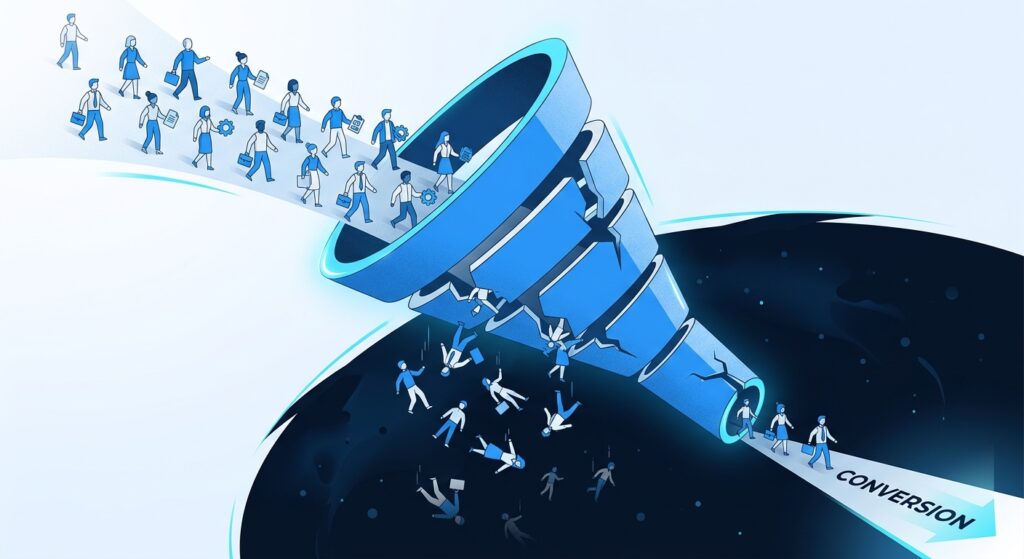
You didn’t lose that lead to a competitor.
You lost it to silence.
This is the thing almost no service business owner wants to hear, because it means the problem isn’t out there somewhere — a tougher market, better-funded competition, a bad economy. The problem is inside the business. Specifically, it’s in the gap between the first contact and the follow-up that never happened.
That gap is where most of the money goes.
The Number That Changes Everything
Research shows that 80% of sales require five or more follow-up contacts before a customer buys. Five. Not one polished proposal. Not a great first impression. Five meaningful touches, spread over time, building enough trust and staying top-of-mind long enough for the prospect to say yes.
Here’s what makes that number painful: 44% of salespeople give up after just one follow-up attempt. Nearly half. Which means in almost every market, the majority of your competition is walking away from the majority of their leads after a single try.
That’s not a competitive landscape. That’s an open door.
The businesses winning right now — not the biggest ones, the smartest ones — aren’t necessarily better at their trade than you are. They’re better at staying in the conversation. They have a system that keeps them present in a prospect’s world until the prospect is ready to buy. And most of the time, the prospect does eventually buy. Just not from whoever gave up first.
Why This Happens
Before we talk about the fix, it’s worth understanding why the follow-up gap exists in the first place. Because it’s not laziness, and it’s not a lack of caring. Service business owners work hard. The problem is structural.
When you’re the owner of a founder-led service business, you’re wearing every hat at once. You’re doing the work, handling the sales conversations, managing the schedule, answering the phones, chasing invoices. Follow-up lives on your mental to-do list — the one that gets cleared every morning by whatever’s most urgent that day. And follow-up is almost never urgent. It just becomes expensive.
Here’s what happens in practice. You send a quote on a Monday. The prospect says they’ll think about it. Tuesday you’re slammed with a job. Wednesday you have an equipment issue. By Thursday the quote is buried under everything else that came in, and the prospect has moved on to whoever followed up when you didn’t.
You didn’t lose that job because you were bad at your trade. You lost it because you didn’t have a system that follows up when you’re too busy to remember.
What It’s Actually Costing You
Most business owners think about this problem in terms of individual deals. “I probably lost that one job.” That’s the wrong frame.
Think about it at volume. If you send twenty quotes a month and close six of them, that’s a 30% close rate. If the research holds and most of those other fourteen people eventually bought from someone — they just bought from whoever stayed in the conversation — you’re looking at a meaningful chunk of revenue walking out the door every single month. Not because the leads were bad. Not because your price was wrong. Because nobody followed up.
There’s another cost that’s harder to see. When leads go cold, most business owners assume the lead wasn’t serious. So they go generate more leads. They spend more on ads, work more referral relationships, try more platforms. They’re trying to fill a bucket that has a hole in it. The answer to a follow-up problem is never more leads. It’s a system that converts the leads you already have.
What the System Looks Like
The good news is that a functional follow-up system isn’t complicated. You don’t need an enterprise CRM or a dedicated sales team. You need a sequence and something to run it automatically.
Here’s the simple version for a service business:
Day 0 — You send the quote or proposal. Clean, clear, professional.
Day 2 — A short check-in. Not pushy. “Just wanted to make sure you got this and see if you have any questions.” That’s it. One sentence.
Day 5 — A value touch. A tip relevant to their situation, a quick piece of useful information, something that shows you’re thinking about their problem rather than just chasing a sale. This is the one most people skip, and it’s the one that does the most trust-building.
Day 10 — A gentle close. “I wanted to follow up one more time before I move on. If the timing’s not right, no worries at all — just let me know and I’ll reach back out when it makes sense.” This removes the pressure, which paradoxically makes people more likely to respond.
That’s four touches over ten days. Automated correctly, none of this requires you to remember anything. The sequence runs when a quote goes out, stops when they reply or book, and follows up exactly when it should without you thinking about it.
The Bigger Picture
Follow-up is an Action pillar problem — it sits in the conversion section of your customer journey. But it connects upstream and downstream to everything else.
When you go quiet after a first contact, you don’t just lose the sale. You lose the trust that was starting to build. The prospect who almost hired you isn’t neutral about you after that — they just forgot about you. And a customer who doesn’t feel followed-up with during the sales process rarely turns into the kind of customer who refers others. You lose the lead, the relationship, and every future customer that relationship might have generated.
Fixing follow-up is one of the highest-ROI things you can do in a service business because it costs nothing to implement — just the system — and it converts leads that are already in your pipeline. You’ve already done the work to generate them. You’ve already had the first conversation. You just need a process that takes it the rest of the way.
Most businesses aren’t losing because they’re bad at their trade. They’re losing because they’re bad at the part that comes after.
Most businesses have leads sitting in their pipeline right now that could still close — they just need a system to follow up on them.
The Marketing Clarity Kit scores your entire conversion system in 10 minutes and delivers a personalized 45-page report showing you exactly where the gap is and what to fix first. Seven training videos included — one for every area of your customer journey.
$97. Instant access. No call required.